Hibernating Bear Tai Chi
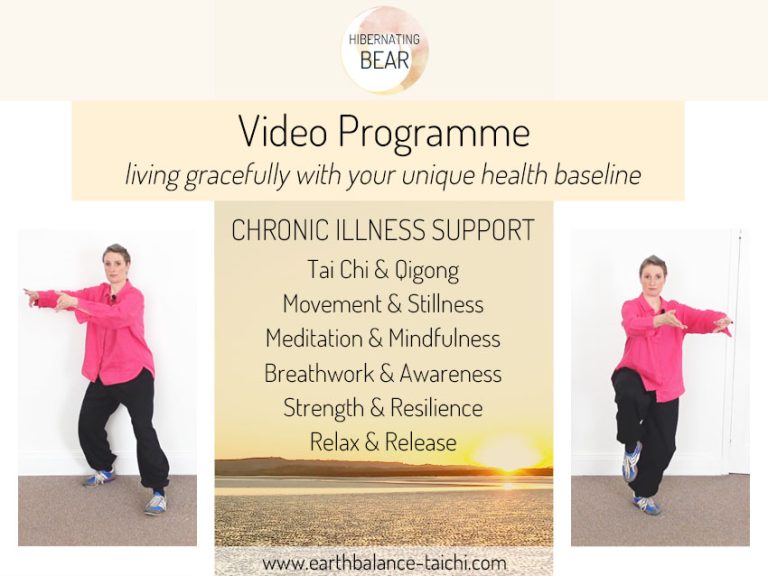
I created the Hibernating Bear Tai Chi programme, to make traditional Tai Chi, Qigong and meditation available to students of all abilities, all ages, and for those living with chronic illness, degenerative health or a different health baseline than the norm. The Hibernating Bear programme focuses on movement and stillness for relaxation and health. Learn dynamic slow movements, nourishing breath work and relaxation techniques to take a positive step towards self care. The Hibernating Bear programme got its name from the characteristics of the bear animal. A bear knows instinctively when to rest and rejuvenate, and when the winter is over he knows when it is time to be active again. My programme is all about restoring balance, following the natural ebb and flow of life and responding to changes with grace.
Movement & stillness for all abilities
Moving gracefully with your baseline
As a Tai Chi, Qigong and meditation instructor, I have distilled my studies and practice of the Classical Chinese movement and stillness arts over the last 20 years, to pass on the most effective methods for improving health and wellbeing. I work with everyday folk privately online, through our Patreon community, and via video classes, to guide them towards an alternative and natural route to self manage chronic health, pain, fatigue, the demands of modern life and the aging process. At any age and ability you can improve your quality of life through regular mindful exercise, breathwork and relaxation techniques. For the chronic health spoonies out there, it is possible to improve your capacity to cope and build resilience too! Join me on the Hibernating Bear Tai Chi programme and learn how you can move gracefully with your baseline.
What will you learn?

Physical Health
- Gentle loosening exercises to warm the body
- Qigong movements
- Find out what qi gong means
- Chen style Tai Chi movements
- Movements that encourage joint rotation, expansion and compression
- Muscle strengthening through whole body connection
- Connective tissue pliability, mobility and elasticity
- Posture and alignment in movement, stillness, and daily life
- Physical symmetry in the body
- The importance of body awareness
- Balance, stability and grounding
- Fall prevention
- Detoxing through movement
- The health consequences of being sedentary
Relaxation & Wellbeing
- Relaxation techniques that are easy to learn
- The meaning of true physical & mental relaxation
- How to tap into the relaxation response
- How body language has an impact on the stress response
- How to activate the vagus nerve
- How to improve your mind & body sensitivity
- Reduce stress and mental tension
- Tools to aid anxiety and depression
- Learn how to create healthy distractions
- The mind and body connection
- Self compassion training
- Playing with mindfulness and meditation
Pain & Fatigue Management
- How to exercise and manage your individual health baseline with grace, not pushing passed your body's tolerance, to avoid extremes
- How to avoid the boom and bust cycle
- What you can do to lessen fatigue
- Exercises when living with chronic fatigue
- Release chronic physical tension
- Movement and stillness for chronic pain management
- Reframing and lessening the pain experience
- Learn how to progressively to build up to a regular exercise practice
- The importance of frequency over duration
- Natural steps to improving your quality of life
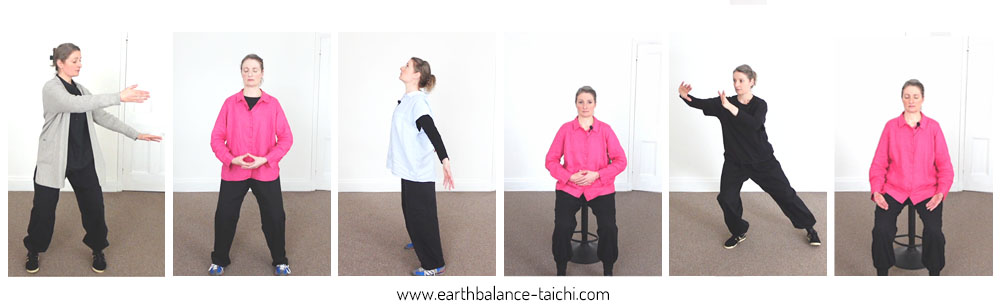
N.B. The Hibernating Bear Tai Chi programme is not tuition where you will learn a Tai Chi routine or a qigong set. The focus is on Tai Chi movements, drills and exercises for health and wellbeing. Especially correcting and maintaining physical alignment, with deep muscular / soft tissue /joint movements and diaphragmatic breathing.
Pacing to your unique baseline
There is a how to guide within the programme which talks about splitting the classes down and working at your own pace. Each video lesson covers one theme, and can be broken down into parts. Every lesson has a timestamp for the different parts. Each student on the programme has a unique health baseline, which changes each day through ebb and flow of living with chronic health. Your training can adapt to reflect this. Whether you can manage half and hour of movement, or five minutes, that's not the focus. It's important for you to not go beyond your ability when training and to learn how to pace gracefully. To learn where your boundaries are, and to work under that when you practice. What we are training in these classes aims to avoid the boom and bust cycle. So that you are able to move a little every day to support your health and wellbeing.
Hibernating Bear Tai Chi Qigong Meditation - Video Classes
HIBERNATING BEAR - THE PROGRAMME
PAIN & FATIGUE

How to aid the symptoms of chronic fatigue with movement and stillness. Explore why Tai Chi and Qigong are so helpful when living with fatigue. Introducing techniques for mind and body to lessen fatigue levels. (55 mins)
Exploring the benefits of appropriate and gentle exercise when living with chronic pain. Using Tai Chi, Qigong, repetition, body awareness, breath work, and relaxation techniques to soften, manage and reframe chronic pain.
(1 hour 2 mins)
Learning to naturally lengthen through the body. Exploring the connection between pain and stretching. Learn to re-educate your movement patterns to release physical tension & help reduce pain levels. (25 mins)

How you hold yourself matters. A poor posture can lead to pain, tension, sprains, fatigue, headaches, arthritis, degenerative discs / joints, damaged nerves, and at worst irreversible damage. Learn how to align your posture and take time each day to train your body to hold itself efficiently, as this will help lessen muscle pain and fatigue over time. (57 mins)
ALIGNMENT / STRUCTURE / COORDINATION / HOW TO MOVE
Connecting the hip, knee, ankle and foot in Tai Chi and Qigong. The knee joint can get exploited and move out of a good alignment very easily. Learn how the hips govern the knee position helping you develop integrated body movements. (58 mins)
A further video to continue exploring the hip, knee, ankle and foot connection in Tai Chi and Qigong. Learn how to stabilise the knees by using the hips. Including a seated relaxation session at the end. (1 hour 2 mins)
Soma Dao Qigong movements to explore well aligned waist, torso and spine rotations. (46 mins)
Strengthening the muscles through Qigong movements. Learning to move the whole body from the pocket muscles. (40 mins)
Learn the expand and compress principle to mobilise and lubricate the joints whilst balancing the muscles and tendons. (43 mins)
Continuing to explore the expand / open and compress / close principle in Tai Chi and Qigong movements. (52 mins)
How to raise and lower the arms in softness with good shoulder alignment and appropriate muscle use. To not exploit the shoulder muscles, instead to nourish and release tension. (52 mins)
Exploring shoulder health in Tai Chi and Qigong movements. Applying the principles learnt from last lesson. (1 hour)
BREATHWORK
A foundation breathwork technique, the abdominal or rest breath. (10 mins)
From natural breathing, we progress onto reverse breathing. Also known as the energetic breath, the active breath or the Taoist breath. (7 mins)
Develop full torso breathwork. (14 mins)
Come into a deeper sense of listening, as you breathe through the body with gentle awareness. (9 mins)
Bring awareness to how you breathe. Learn how to connect the diaphragm through focused breath work. (53 mins)
Training to soften within adversity. Use this whole body scanning technique to soften through every part of your body from your head to your fingers and toes. (22 mins)
A therapeutic breath work technique that can lower your blood pressure and soothe your central nervous system. (7 mins)
RELAXATION / STATE SHIFTING / FLOW STATE / MEDITATION / MINDFULNESS
Learn to listen inwardly, develop presence & sensitivity, and ground through movement and breathwork. The skill of finding your way back into the body, with awareness of your structure, breath and state. (51 mins)
Exploring healthy soft tissue in Tai Chi and Qigong movements. With gentle and powerful spiralling qualities that help whole body pliability, soft tissue elasticity, lengthening the connective tissue, releasing the fascia, and helping to soften muscles and release physical tension. (1 hour)
Tai Chi and Qigong to loosen tension and unbind holdings through spiralling and relaxed movements. Without becoming to soft with noodle limbs and a collapsed body. (51 mins)
Slow movement, breathwork and seated awareness meditation to bring your body down from that heightened state of stress, anxiousness, and hyper vigilance, into a neutral mind and body. To soothe the central nervous system. (58 mins)
Exploring Fang Song / conscious relaxation within mindfulness and meditation. This lesson is part gentle movement and part soft meditation practice. Bringing the mind to a single point of focus to calm, ground and release. (57 mins)
The absence of resistance, known as the water method. A deep physical release explored through seated meditation and Tai Chi and Qigong movements. (59 mins)
The mind and body connection: how the body leads the mind and the mind leads the body. How to trick your central nervous system into relaxation. (57 mins)
A way to be more self compassionate in your movements, sensing in, and interactions. Not reaching with force for a goal or a result. Playing with being subtle. (40 mins)
Focusing on loosening the shoulders and neck. A short follow along in silence lesson with the option of listening to soft piano and bird song. For you to flow and enjoy. (30 mins)
Follow along with this nourishing Taoist practice. (15 mins)

The inner smile Taoist meditation seated practice. (33 mins)
SEATED COLLECTION

Seated Soma Dao Qigong movements. For a more restful and meditative state. (1 hour 3 mins)
Seated Tai Chi silk reeling exercises focusing on turning the waist, a good alignment and structure, and spiralling the arms. (56 mins)

Seated Soma Dao Qigong movements to follow the ebb and flow of chronic health. (40 mins)
Seated eight pieces of brocade / Ba Duan Jin Qigong routine. (46 mins)

Seated five animals Qigong routine, with detailed instruction and form performance. (1 hour 56 mins)
HEALTH & WELLBEING
Exploring cross lateral movements and left to right brain connectivity to help our neural pathways stay strong. Movements where the four limbs all do different things, with differing speeds, pace, timing, shape and coordination. A must for life long brain health. (58 mins)
Attentions spans are very short these days, as modern life is all about shorts, from headlines, stories, to memes. In Qigong and Tai Chi the movements require constant focus. This lesson helps improve clarity and focus whilst down regulating from over stimulation. (28 mins)
Training the skills of balance, stability and standing on one leg. (55 mins)
How to improve lymph system function through exercise and breathwork. (54 mins)
Soma Dao Qigong movements for spine health. Learn how to mobilise, soften and lengthen the spine. (1 hour 9 mins)
Exploring Soma Dao Qigong movements that ground, replenish and release, a time to let go of the old. Helping us reset our central nervous system. (52 mins)
Using the internal power of torso rotations, spirals and tortion to give a massage to the digestive system. Perform this after lunch to help reduce bloating, discomfort and support the symptoms of IBS. (40 mins)

Supporting mental health in movement and stillness. Exploring the happy brain chemicals of serotonin, dopamine and endorphins. (47 mins)
New classes being added, come back soon!
Hibernating Bear Tai Chi - Ways To Learn
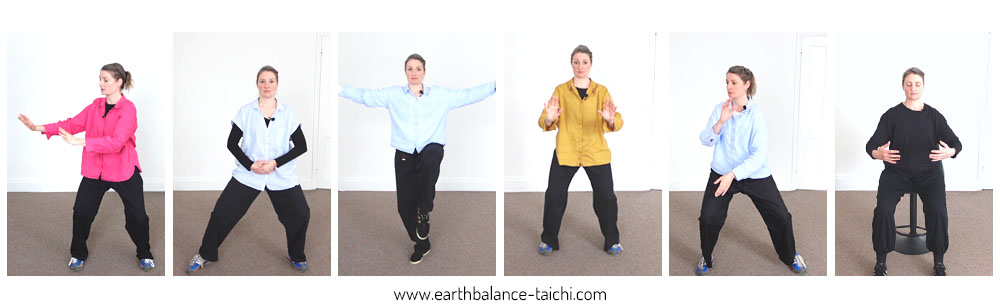
- £37-£45
- 121 Online Class
- MsTeams
- Book here
- £45
- 121 Classes
- Personalised Videos
- Book here
- £10 pcm + VAT
- Monthly subscription
- Video library access
- Water student Patreon
- £75
- Lifetime access
- MP4 downloads
- Buy on Etsy
Hibernating Bear Tai Chi - Health Resources

Hibernating Bear Tai Chi - Your Instructor Nicola
A little about me. Hello everyone, I live with hypermobility spectrum disorder, fibromyalgia, and chronic fatigue syndrome. My experience of living with chronic pain, chronic fatigue and physical restriction has given me a unique insight into training and teaching Tai Chi and Qigong. I have trained the practices personally since 2006, experiencing the raw ebb and flow of chronic health since and seeing the benefits these practices can offer. I have trained many students with a differing base line than the norm, in private tuition in the home, across the community, in residential homes for the elderly, at hospices, at chronic health support groups, at physiotherapy studios, on behalf of the council wellbeing team, on behalf of the chronic pain clinic at a hospital and through my online classes.
I have supported students with the following conditions:
- Parkinson's disease
- Cancer (pre op, post op, remission and terminal)
- Ehlers Danlos syndrome / Hypermobility joint syndromes
- Fibromyalgia / Lupus
- Endometriosis / Polycystic ovary syndrome / Fertility
- Chronic fatigue syndrome / Chronic pain
- Arthritis / Psoriatic arthritis / Rheumatoid arthritis / Osteoarthritis
- Irritable bowel syndrome (IBS)
- High/low blood pressure / Recovery from heart failure
- Asthma / Respiratory disease
- Recovery from spinal injury / Post sciatica / Scoliosis / Osteoporosis
- Recovery from stroke / Recovery from brain injury
- Recovery from injury e.g. torn muscles, hernia, rotator cuff injury, frozen shoulder
- Depression / Stress / Anxiety / Over thinking
- Fall prevention / balance
- Seasonal affective disorder (SAD)
- Dementia / Alzheimers / Learning difficulties / Autism
- Senior citizens and the elderly up to 96 years old
- Including care givers
Hibernating Bear Tai Chi - Hypermobile Video Classes
For the bendy folk out there I also have a video programme dedicated to hypermobility syndromes and Ehlers Danlos syndrome. Where the focus is stabilising the joints and learning to be in your body in spite of pain and fatigue. These classes can also be of benefit to any of my Hibernating Bear students, as the theme of living well with chronic illness runs through this programme too. Click the image below to find out more about this programme, there's a whole series of videos to explore. Wishing you happy training!

Hibernating Bear Tai Chi - As with all medical conditions, injuries and/or ill-health, please consult with your Doctor prior to starting a class. Tai Chi, Qigong and Meditation are not a replacement for conventional medical treatment. This article is for information only and should not be taken as medical advice.